Automation is reshaping the casting industry significantly. As manufacturing processes face continuous challenges, automation offers a solution to improve efficiency. According to Dr. Emily Smith, an expert in casting technology, “Automation streamlines production and enhances quality in casting.” Her insights highlight the pressing need to understand what is the role of automation in casting industry today.
The casting industry is evolving. Increased demands for precision and speed define modern production. Automation contributes to these goals by reducing human error. Machines can handle repetitive tasks with unmatched accuracy. However, this shift does not come without concerns. The integration of automation can create skill gaps in the workforce. Training is essential to ensure workers remain relevant.
Moreover, the transition may lead to resistance among traditionalists in the industry. Some may question the reliability of automated systems. It’s crucial to find a balance between technology and human expertise. Embracing automation should not mean abandoning skill. A blend of both could forge a stronger future for casting.
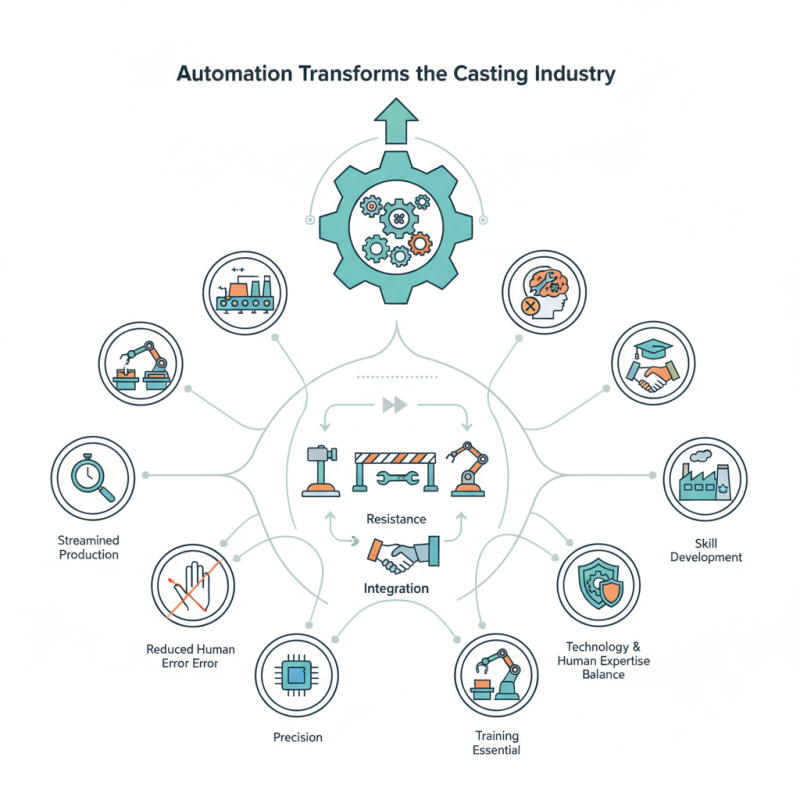
The rise of automation in the casting industry is transforming production processes. With advancements in technology, companies are increasingly adopting automated systems. According to a report by the American Foundry Society, automation can enhance productivity by up to 30%. This growth stems from the need for consistent quality and faster turnaround times.
Cyber-physical systems are now commonplace. These systems monitor casting processes in real time, reducing defects and waste. A study shows that automation can cut operational costs by 20%. However, the initial investment can be a hurdle for smaller foundries. They often struggle to integrate new technologies. This gap creates uneven benefits across the industry.
Tips: Start small. Implement automation in one area to test its effectiveness. Training staff is crucial. They should know how to operate new technologies. Consider partnering with tech specialists for guidance. Continuous assessment will help identify areas needing improvement. Be prepared to adapt as technology evolves. Automation is a journey, not a destination.
Automation is revolutionizing the casting industry through key technologies. One major technology driving this transformation is robotic automation. According to the International Journal of Advanced Manufacturing Technology, robotic systems can improve casting precision by up to 90%. These robots reduce human error and enhance safety in foundries.
Another vital technology is the Internet of Things (IoT). IoT devices monitor equipment in real-time. This allows for predictive maintenance, reducing downtime by 30%, as reported by the Casting Industry Institute. Sensors collect data on temperature, pressure, and flow rates, enabling smarter production decisions.
However, integrating these technologies is not without challenges. Many companies struggle with initial costs and employee skill gaps. Training existing staff can be time-consuming and complex. In addition, not all foundries have access to the latest technology. This creates a divide in productivity levels across the industry. While automation offers significant benefits, companies must navigate these hurdles to fully realize its potential.
Automation is reshaping the casting industry, significantly impacting production efficiency and quality. With advanced technologies like robotic arms and AI-driven processes, factories can optimize operations. These tools reduce human error and enhance precision. By streamlining workflows, companies experience shorter production cycles and increased throughput. For instance, computer-controlled pouring systems ensure consistent metal flow, reducing waste and improving uniformity.
Tips for maximizing automation benefits include regularly updating software and equipment. Outdated systems may hinder performance. Training workers to adapt to new technology is crucial. They need to understand both the equipment and safety protocols. Additionally, consider customizing automation solutions to fit specific production needs. This personalized approach can further enhance both quality and efficiency.
However, challenges remain. Not all employees may immediately embrace automation. Resistance can affect morale and productivity. It's vital to foster a culture of adaptability and open communication. Companies should continuously analyze performance metrics beyond automation. A thorough review process helps identify areas needing improvement. Balancing technology with human skills is key for sustainable success in the casting industry.
Automation introduces significant changes to the casting industry, but it also presents unique challenges. One major challenge is the initial cost of implementing automation. Many companies struggle to secure funding for advanced machinery and technology. This can limit the ability to compete in a rapidly evolving market. A thorough cost-benefit analysis is essential to justify these investments.
Another issue is workforce adaptation. Skilled workers may feel threatened by automation. Training programs must be developed to help workers transition to new roles. This transition requires time and resources, as employees must gain confidence in using new technologies. Additionally, resistance to change is common. Creating a culture that embraces innovation can mitigate this resistance. Involving employees in the automation process can foster a sense of ownership.
Furthermore, integration challenges can arise. Legacy systems often do not communicate well with new automated technologies. Companies need to ensure compatibility to optimize productivity. This might require a phased approach to implementation. Such strategies can help address unforeseen issues that arise during integration. Flexibility will be crucial as businesses navigate these complexities while striving for efficiency and quality in their operations.
| Dimension | Details |
|---|---|
| Increased Efficiency | Automation reduces manual labor, speeding up production cycles. |
| Quality Control | Automated systems provide consistent monitoring for defects. |
| Cost Reduction | Lower labor costs lead to decreased overall production expenses. |
| Flexibility | Robots can easily be reprogrammed for different casting tasks. |
| Safety Improvements | Automation reduces worker exposure to hazardous environments. |
| Data Collection | Automated systems generate valuable production data for analysis. |
| Scalability | Automation systems can quickly scale up production to meet demand. |
| Challenges in Implementation | Resistance to change, high initial costs, and job displacement concerns. |
| Solutions to Challenges | Training programs, gradual integration, and investment in workforce reskilling. |
The casting industry is on the brink of transformation. Automation is playing a pivotal role. Advanced technologies streamline processes, enhancing efficiency. Robotics handle repetitive tasks with precision. This minimizes human error and waste in production. However, the transition isn’t without challenges. Companies must balance automation with a skilled workforce. Job displacement concerns linger, highlighting the need for retraining.
Future trends show an increasing reliance on automation in casting innovations. Smart manufacturing will integrate data analytics to optimize operations. 3D printing is revolutionizing mold creation. This allows for greater design flexibility and reduced timeframes. Yet, technology integration can pose difficulties. The initial investment may be significant, and employee adaptability varies. Companies need to cultivate a culture of innovation while addressing these gaps.
As automation advances, real-time monitoring will become critical. This enables predictive maintenance, enhancing equipment longevity. Yet skepticism exists. Some professionals may resist relying solely on machines. Balancing automation with human insight is vital. The industry's future lies in collaboration, blending technology with traditional expertise. Embracing both sides will lead to sustainable growth and resilience.
: Automation enhances production speed and quality. Companies adopt technology to improve efficiency and reduce waste.
Automation can increase productivity by up to 30%. It also cuts operational costs and reduces human error.
Yes, smaller foundries struggle with initial investments and integrating new technologies. This leads to uneven benefits.
Regularly update software, train workers on new technologies, and customize solutions to fit production needs.
Training ensures that staff can operate new systems effectively and understand safety protocols. It’s crucial.
Increased reliance on data analytics, smart manufacturing, and 3D printing. However, initial costs may be high.
Foster a culture of open communication. Encourage adaptability and show how automation can enhance roles.
It allows for predictive maintenance, which extends equipment life and improves overall efficiency.
There are job displacement concerns. Companies should focus on retraining employees to adapt to new roles.
A blend of technology and skilled labor will lead to sustainable growth. Collaboration is key for resilience.
The casting industry is undergoing a significant transformation due to the rise of automation, which plays a crucial role in improving operational efficiency and product quality. Key technologies such as robotics, artificial intelligence, and IoT are driving this shift, enabling manufacturers to streamline processes, reduce waste, and achieve greater precision. As automation increasingly integrates into casting operations, it not only enhances production capabilities but also addresses challenges such as labor shortages and safety concerns.
However, implementing automation is not without its hurdles, including the need for substantial investment and workforce re-skilling. To overcome these challenges, companies are exploring innovative solutions and adapting to future trends that highlight what is the role of automation in the casting industry. As we look ahead, embracing automation will be essential for staying competitive and fostering advancements in casting technologies, solidifying its position as a key catalyst for growth in the industry.

Singer Cast