Choosing the right metal for casting projects is crucial for success. Industry expert Dr. Emily Foster, a renowned metallurgist, once said, "Selecting the right metal makes or breaks a project’s integrity." This insight highlights the importance of understanding metal properties.
When considering how to choose the right metal for casting projects, many factors come into play. Each metal has unique characteristics, such as strength, ductility, and temperature tolerance. For example, aluminum offers lightweight benefits but can be less durable than steel.
Potential pitfalls arise when insufficient research or experience leads to poor choices. One might overlook the environmental conditions in which the final product will operate. Failing to match metal properties with project requirements can lead to costly mistakes. It’s essential to weigh your options carefully and consult experts when needed.
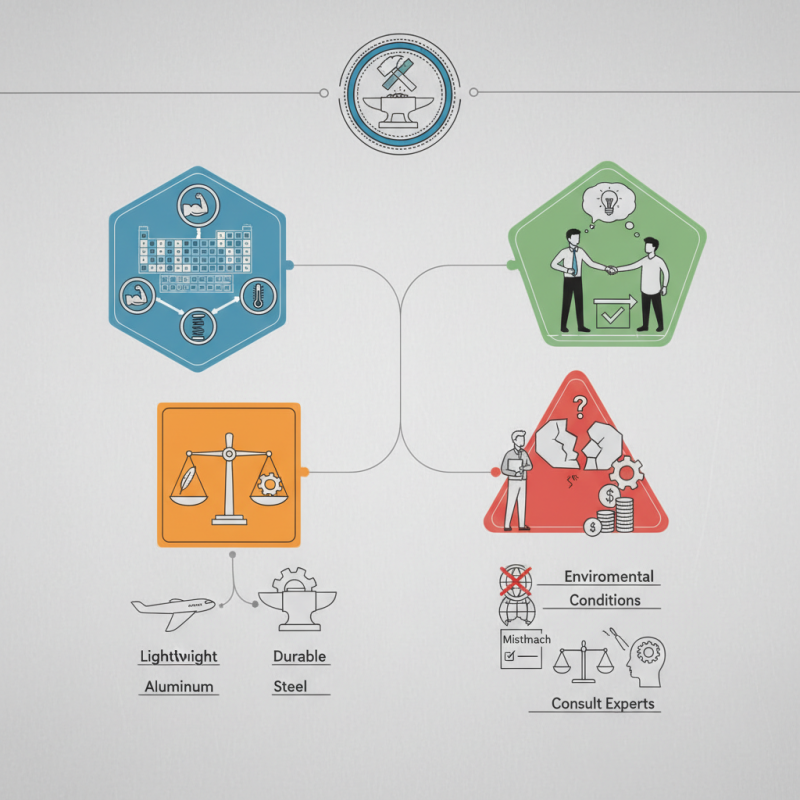
Choosing the right metal for casting projects is crucial for achieving desired results. Different metals offer unique properties that influence the casting process. For instance, aluminum is lightweight and resistant to corrosion. However, it can be challenging to achieve fine details due to its fluidity. This means it may not be the best choice for intricate designs.
Steel stands out for its strength and durability. It is ideal for functional parts that require toughness. Yet, it requires higher casting temperatures, which may complicate the process for beginners. On the other hand, bronze and brass are popular for artistic projects. They provide excellent fluidity and a beautiful finish. But they may be more expensive and require more skill to work with.
Think about the application of the final product. Will it face heavy wear? Consider a metal's wear resistance. If aesthetics matter, select one that offers a pleasing appearance. Each choice comes with trade-offs. Understanding these factors can lead to better decisions in your casting projects.
| Metal Type | Melting Point (°C) | Density (g/cm³) | Common Applications | Advantages |
|---|---|---|---|---|
| Aluminum | 660 | 2.70 | Automotive parts, aircraft components | Lightweight, good corrosion resistance |
| Bronze | 950 | 8.96 | Sculptures, coins | Good wear resistance, attractive finish |
| Copper | 1085 | 8.96 | Electrical components, plumbing | Excellent electrical conductivity, malleable |
| Cast Iron | 1200 | 7.00 | Pipes, engine blocks | Excellent wear resistance, good castability |
| Steel | 1370 | 7.85 | Construction, machinery | High tensile strength, versatile |
| Zinc | 419 | 7.14 | Die casting, galvanizing steel | Corrosion resistant, easy to cast |
| Titanium | 1668 | 4.51 | Aerospace, medical implants | High strength-to-weight ratio, biocompatible |
| Nickel | 1455 | 8.90 | Alloys, batteries | Corrosion resistant, high melting point |
| Lead | 327 | 11.34 | Batteries, radiation shielding | Easy to cast, dense |
| Magnesium | 650 | 1.74 | Aerospace, automotive | Very lightweight, good strength |
: Aluminum is lightweight and corrosion-resistant. However, it struggles with fine detail due to its fluidity.
Steel is strong and durable, making it ideal for functional parts. High casting temperatures may pose difficulties for beginners.
Bronze and brass provide excellent fluidity and a beautiful finish. Yet, they can be expensive and require more skill.
Consider if it will face heavy wear and select a metal based on wear resistance and aesthetics.
Aluminum costs around $2,400 per ton, while cast iron is about $600 per ton, making iron attractive for large projects.
Aluminum can last up to 30 years. Cast iron is wear-resistant but prone to corrosion, leading to maintenance costs.
Aluminum casting can require 30% more energy than iron, impacting the total project cost significantly over time.
Each metal has strengths and weaknesses. Understanding these trade-offs can help with informed decision-making.
Analyze initial costs versus long-term maintenance and durability. A balance between cost and quality is essential.
No, these metals require more skill and experience to work with effectively, which can be a challenge.
Choosing the right metal for casting projects is crucial for achieving the desired quality and functionality of the final product. To effectively determine which metal to use, it is essential to understand the different types of metals available for casting, such as ferrous and non-ferrous options, each possessing unique characteristics. Factors such as the specific application, mechanical properties, and thermal conductivity should be thoroughly analyzed to ensure the selected metal meets project requirements.
Additionally, evaluating the cost-effectiveness and sustainability of metal choices is vital. An understanding of the environmental impact of various metals can guide decision-making toward more eco-friendly options. By considering these elements—types of metals, their properties, economic viability, and sustainability—individuals and businesses can confidently navigate how to choose the right metal for casting projects, leading to successful outcomes.

 Singer Cast