Die casting is a popular manufacturing method known for its efficiency and precision. Many industries rely on it for producing high-quality metal parts. But what are the advantages of die casting over other processes? This question is vital for manufacturers seeking to optimize production.
In die casting, molten metal is injected into a mold under high pressure. This technique allows for complex designs and tighter tolerances. Compared to processes like sand casting or machining, die casting significantly reduces material waste. Furthermore, it offers faster production rates, making it ideal for large-volume orders.
Despite these benefits, die casting may not suit all applications. There are instances where other methods provide better flexibility or cost-effectiveness. However, understanding die casting's strengths is key for informed decision-making in manufacturing. Evaluating its advantages helps businesses choose the right method for their needs.
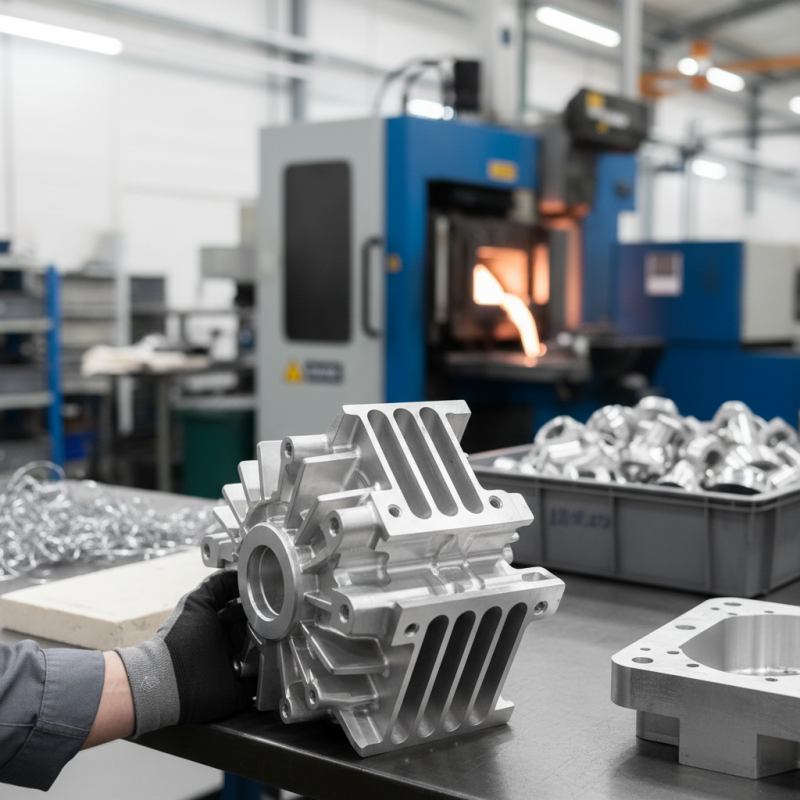
Die casting is an efficient and versatile manufacturing process. It involves forcing molten metal into a mold under high pressure. This method allows for the creation of complex shapes with great precision. High-quality finishes are achievable with die casting, reducing the need for extensive machining.
One of the main benefits of die casting is its ability to produce large quantities quickly. This speed helps manufacturers meet tight deadlines and growing demand. However, the initial setup costs can be high. Designing molds requires significant investment. This cost may deter small businesses or startups from utilizing die casting.
Despite these challenges, many industries rely on die casting. Automotive components and electronics often use this method because of its precision. It reduces waste and improves material efficiency. However, it is essential to consider whether die casting is the best option for specific projects. Factors such as part complexity and production volume must be evaluated carefully.
Die casting has distinct advantages over other manufacturing processes, particularly when analyzing cost-effectiveness and precision. Reports indicate that die casting can achieve tolerances as tight as ±0.005 inches. This precision is often superior to processes like sand casting or machining. For example, sand casting can yield tolerances of ±0.020 inches, which may not be acceptable for high-quality applications.
Another noteworthy comparison involves the production volume. Die casting excels in high-volume scenarios. Data shows that die casting can produce thousands of parts in a matter of hours. This dramatically reduces per-unit costs. On the other hand, processes like investment casting often do not achieve such efficiencies. However, die casting requires significant upfront investment in tooling, which can be a barrier for smaller projects.
Moreover, the materials used in die casting—such as aluminum and zinc—offer excellent mechanical properties. This contrasts with methods like injection molding, which may not perform as well under high temperature or pressure. However, the limited material options in die casting can pose challenges for specific applications. Balancing these factors is essential for manufacturers when selecting the best process for their needs.
Die casting offers significant advantages over other manufacturing methods. One key benefit is precision. This process allows for intricate designs with tight tolerances. Parts produced through die casting often require little to no additional machining, reducing costs and lead time. The smooth surface finish also enhances aesthetics and functionality.
Another advantage is efficiency in production. Die casting enables the rapid manufacture of large quantities of parts. High-pressure injection yields consistent results, minimizing waste. This is particularly beneficial for industries needing mass production. The ability to use various alloys expands design possibilities while providing strength and durability.
However, die casting has its challenges. High initial tooling costs can deter some manufacturers. The process may also limit the thickness of the parts. Additionally, not all materials are suitable for die casting. These considerations invite manufacturers to assess their specific needs carefully. While die casting holds numerous benefits, it’s essential to weigh these against project requirements.
Die casting is widely utilized in various industries due to its efficiency and precision. Automotive manufacturing is one prominent application, where it produces components like engine blocks and transmission cases. These parts require high strength and durability that die casting can provide. With this method, manufacturers can create complex geometries that meet strict specifications.
Another application of die casting is in the aerospace sector. Aircraft components, such as brackets and housings, benefit from the lightweight yet robust nature of die casting. This process enables the production of intricate shapes while ensuring superior dimensional accuracy. Medical device manufacturing also uses die casting for creating reliable and precise components.
Despite its advantages, die casting is not without challenges. The initial tooling costs can be high, which may deter some firms. Additionally, fine-tuning the process parameters requires expertise and experience. Some manufacturers may struggle with defects like porosity or surface imperfections. These issues highlight the need for ongoing innovation and learning in the die casting process.
Die casting is popular for high-volume production, but it has marked limitations. First, die casting is best suited for non-ferrous materials. This restricts applications. For projects requiring ferrous materials, other methods like sand casting are preferred. According to a study by the American Foundry Society, sand casting often exhibits lower production costs for ferrous alloys.
Another limitation arises from the initial costs. Establishing a die casting process requires significant investment in molds. Molds can cost anywhere from thousands to tens of thousands of dollars. Maintaining these molds adds to the long-term costs. This high upfront cost can deter smaller manufacturers from adopting this method.
Furthermore, the complexity of part design can limit die casting’s effectiveness. Intricate or large parts may not be suitable for this method. Thin sections can pose challenges during production. A report from the International Journal of Advanced Manufacturing Technology highlights that designs needing extensive tooling can lead to delays and increased production times. While die casting offers advantages, like precise dimensions and good surface finish, these limitations significantly impact its usability in certain applications.
| Criteria | Die Casting | Other Methods |
|---|---|---|
| Production Speed | High (up to 200 cycles/hr) | Medium to Low |
| Material Waste | Minimal | Higher due to trimming |
| Surface Finish Quality | Excellent | Varies Significantly |
| Setup Cost | High (initial tooling cost) | Typically Lower |
| Production Volume | Optimal for high volume | Better for low/mid volume |
| Material Versatility | Limited to certain alloys | Wide range of materials |
| Dimensional Tolerance | High precision | Varies by method |
| Flexibility in Design | Less flexible for complex shapes | More adaptable to design changes |
: Die casting offers high precision and intricate designs. It has tight tolerances, often needing no additional machining.
Die casting excels in high-volume production, creating thousands of parts quickly. This reduces per-unit costs significantly.
Materials like aluminum and zinc are common. These provide excellent mechanical properties, though options can be limited.
Initial tooling costs can be high, deterring some manufacturers. There are also thickness limits and material suitability issues.
Automotive, aerospace, and medical device industries widely use die casting for producing strong and precise components.
It allows for complex geometries and intricate shapes, enhancing both functionality and aesthetic appeal.
Defects like porosity and surface imperfections can occur. Addressing these requires ongoing innovation and careful monitoring.
No, die casting is best for high-volume projects. Smaller projects may not justify the initial investment in tooling.
Die casting is a manufacturing process that involves forcing molten metal into a mold to create precise and complex shapes. This article explores what are the advantages of die casting over other processes by conducting a comparative analysis with various manufacturing methods. Key advantages of die casting include the ability to produce highly intricate designs, consistent dimensional accuracy, and a smoother surface finish. These characteristics make die casting a preferred choice in several applications across various industries, such as automotive, aerospace, and electronics.
Despite its benefits, die casting does have limitations, particularly regarding material selection and production volume constraints. However, its efficiency and cost-effectiveness in high-volume production scenarios often outweigh these drawbacks. In summary, die casting stands out as a superior manufacturing method due to its speed, precision, and versatility, making it an essential process in modern manufacturing.

Singer Cast