In the rapidly evolving landscape of metal manufacturing, staying updated is crucial. Industry expert Dr. Emily Zhao, a leading figure in advanced manufacturing technologies, emphasizes this point. She states, "Organizations need to adapt quickly to leverage new trends in metal manufacturing for sustained success."
But what are the latest trends in metal manufacturing? Several emerging technologies and methodologies are reshaping the industry. Additive manufacturing, or 3D printing, is pushing boundaries, allowing greater design flexibility and reduced material waste. Moreover, automation and AI are enhancing production efficiency, yet they also raise questions about workforce displacement.
Sustainability trends are also becoming essential. Companies are exploring recycled metals and eco-friendly materials. However, balancing innovation with environmental responsibility presents real challenges. Navigating these trends requires more than knowledge; it demands a strategic approach to implementation and adaptation. Understanding these dynamics can help businesses thrive in a competitive market.
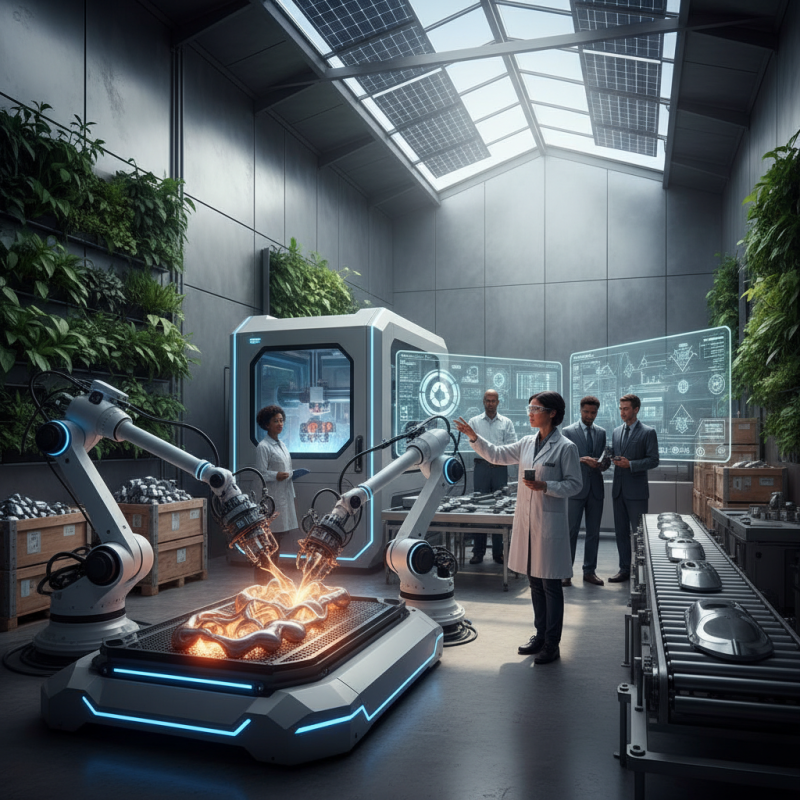
The landscape of metal manufacturing is rapidly transforming due to emerging automation technologies. Recent reports indicate that over 50% of manufacturers are investing in robotic solutions to streamline their operations. Automated robots are taking over repetitive tasks. This shift is not simply a trend; it’s a necessity for enhancing productivity and reducing labor costs in an increasingly competitive market.
Machine learning plays a crucial role in automation. It allows for predictive maintenance, which reduces downtime significantly. A recent survey revealed that companies implementing AI-driven maintenance strategies have seen a 30% decrease in equipment failures. However, this reliance on technology raises concerns about workforce skills. The need for upskilling becomes paramount as traditional roles evolve. Many workers may find themselves unprepared for the demands of a high-tech environment.
Additive manufacturing, or 3D printing, is another significant trend. It offers unprecedented design flexibility and material efficiency. Reports suggest that this technology could reduce material waste by up to 70%. Yet, challenges remain. Many companies struggle with integrating these advanced technologies into existing workflows. Transitioning can be difficult without proper planning and resources.
| Trend | Description | Impact | Implementation Year |
|---|---|---|---|
| Automation and Robotics | Increased use of robotics for assembly and quality control. | Higher efficiency and reduced labor costs. | 2023 |
| 3D Printing | Additive manufacturing techniques for complex metal parts. | Customization and reduced material waste. | 2022 |
| Smart Manufacturing | Integration of IoT for real-time monitoring and data analysis. | Enhanced decision-making and operational improvements. | 2022 |
| Sustainability Practices | Focus on eco-friendly materials and processes. | Reduction in environmental footprint. | 2023 |
| Artificial Intelligence | Utilization of AI for predictive maintenance and quality control. | Increased equipment uptime and product quality. | 2024 |
| Digital Twinning | Creation of digital replicas of physical manufacturing processes. | Better simulation and optimization of production processes. | 2024 |
| Remote Monitoring | Enabling factory operators to monitor production from anywhere. | Increased flexibility and response times. | 2023 |
| Advanced Materials | Development of new alloys and composite materials for improved performance. | Enhanced strength and reduced weight of components. | 2023 |
| Supply Chain Digitization | Implementation of digital tools for supply chain management. | Faster response to market changes and better inventory management. | 2023 |
| Collaborative Robots (Cobots) | Robots designed to work alongside human workers safely. | Enhanced productivity and safety in manufacturing tasks. | 2024 |
: Over 50% of manufacturers are investing in robotic solutions to improve operations.
Machine learning enables predictive maintenance, reducing downtime and improving equipment reliability.
Additive manufacturing can reduce material waste by up to 70%, providing significant efficiency.
Integrating new technologies into existing workflows can be difficult without proper planning and resources.
Implementing closed-loop systems helps reduce water waste while saving operational costs.
Many companies find the upfront investment for modern sustainable technologies challenging.
As automation increases, workers must adapt to new technology demands and evolve their skills.
Begin with prototypes and collaborate with experts to address challenges effectively.
Energy-efficient machinery, like solar-powered equipment, lowers the carbon footprint of manufacturing processes.
A mindset of continuous improvement can lead to significant advancements in efficiency and innovation.
In the rapidly evolving field of metal manufacturing, several trends are shaping the industry. Firstly, automation technologies are emerging as game changers, streamlining processes and enhancing efficiency. Alongside this, sustainable practices are redefining production methods, with an emphasis on reducing waste and energy consumption. Advanced materials are also influencing current trends, providing enhanced performance and durability in metal components.
Furthermore, the integration of artificial intelligence and machine learning is transforming metal fabrication, enabling smarter decision-making and predictive maintenance. Additionally, innovations in metal additive manufacturing techniques are expanding design possibilities and reducing lead times. Collectively, these developments highlight what are the latest trends in metal manufacturing, showcasing a shift towards a more efficient, sustainable, and technologically advanced industry.

 Singer Cast