Choosing the right certification can determine whether an industrial component earns trust or creates costly delays. Buyers, engineers, and auditors often ask, “what certifications are required for industrial components” before approving a supplier. The answer depends on the component’s material, application, destination market, and risk level.
A pressure vessel part may require ASME-related compliance. An automotive fastener may need IATF 16949 support from its manufacturer. Electrical components often face UL, CE, or other recognized conformity requirements. ISO 9001 can demonstrate controlled quality processes, while ISO 14001 and ISO 45001 address environmental and workplace management. These certifications do not replace technical testing, traceability, or product documentation. They support them.
Details matter.
In practice, experienced procurement teams review certificates, issuing bodies, scope statements, expiry dates, and site addresses. A certificate covering one factory may not cover another facility. A logo on a product page proves very little without verification. I have also seen suppliers present an impressive certification list while missing a required test report. That gap can stop a shipment. It can also weaken customer confidence.
This guide examines seven widely recognized certifications and approval frameworks for industrial components. It explains where each may apply, what evidence buyers should request, and which limitations deserve attention. Requirements can change by industry and jurisdiction. Therefore, this overview should support professional review, not replace advice from qualified auditors, engineers, or regulatory specialists.
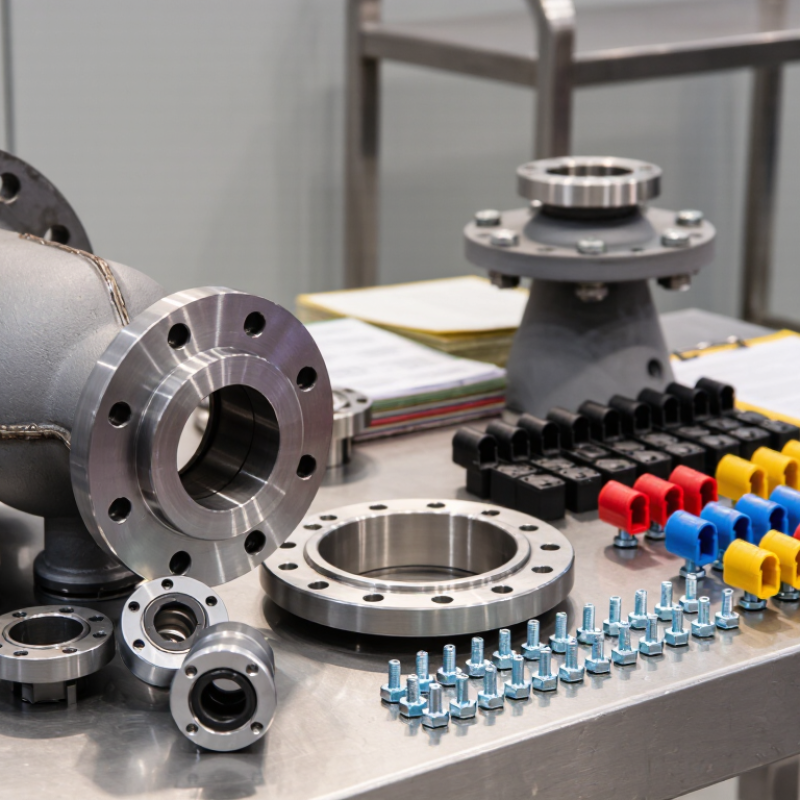
Certification requirements for industrial components are more than paperwork. They show how a product was designed, tested, documented, and controlled. In supplier audits, I look beyond certificates. I check traceability, inspection records, calibration dates, and corrective actions. A polished certificate cannot repair weak production controls.
The seven commonly requested areas include quality management, environmental management, occupational safety, electrical safety, hazardous-area protection, material compliance, and pressure equipment safety. Each requirement answers a different risk. Quality certification supports consistent dimensions and performance. Environmental certification examines waste, energy, and operational impacts. Safety certification addresses worker protection and product hazards. Material rules restrict substances that may create health or environmental concerns. Pressure and hazardous-area approvals require evidence from controlled testing.
Requirements also change by destination, application, and component design. A valve used near combustible gas needs different evidence from a standard conveyor bracket. Buyers should confirm whether they need a management-system certificate, a product certificate, or a declaration of conformity. These documents are not interchangeable. That distinction is often missed.
I have seen suppliers treat certification as a final purchasing step. That approach creates delays. Testing, labeling, technical files, and supplier controls may need attention much earlier. Some requirements are also interpreted differently across markets, so assumptions deserve review. Certification helps build trust, but reliable performance still depends on engineering discipline, honest records, and consistent production.
For industrial components, ISO 9001 and IATF 16949 form a practical quality foundation. ISO 9001 applies across many industries. IATF 16949 adds stricter controls for automotive supply chains.
ISO 9001 requires controlled processes, documented responsibilities, risk-based thinking, and continual improvement. On a component production floor, this may mean checking material certificates before machining begins. Operators also record torque values, inspection results, and equipment status. These records create traceability when a customer questions a batch. Small details matter.
IATF 16949 goes further for automotive components. It emphasizes defect prevention, process capability, product safety, and customer-specific requirements. Tools such as FMEA, control plans, measurement system analysis, and production part approval support this approach. A supplier should connect these tools rather than treat them as separate files. A perfect-looking folder is not enough. Auditors and customers expect evidence from real production.
Certification alone does not guarantee reliable parts. A company may pass an audit while struggling with training gaps or rushed inspections. That weakness deserves honest review. Managers should study scrap trends, recurring complaints, calibration records, and corrective-action results. Employees must understand why each check exists. When quality data changes daily decisions, ISO 9001 and IATF 16949 become working systems, not certificates on a wall.
Industrial component suppliers often face different certification expectations. AS9100 supports aerospace quality management, while API Spec Q1 addresses quality controls for energy-related manufacturing. Neither certificate should be treated as a simple sales badge. Contract requirements, component risk, and customer specifications usually determine what is necessary.
In an aerospace workshop, AS9100 may shape configuration control, supplier evaluation, and product traceability. A technician should be able to connect one part to its material record, inspection results, and approved drawing. In energy component production, API Spec Q1 can strengthen control over pressure-related products, special processes, and nonconforming items. Calibration records must be current. Test results must be readable and retrievable.
Small details matter.
Effective implementation requires trained auditors, documented procedures, and evidence from the factory floor. During an assessment, staff may need to explain why a measurement tool was removed from service or how a material batch was quarantined. These answers reveal more than a framed certificate. A certificate alone proves little. It can hide weak training, rushed inspections, or incomplete corrective actions. That is an uncomfortable reality.
Manufacturers should review customer contracts, applicable regulations, and component safety risks before selecting certifications. Independent certification bodies should verify the management system through regular audits. Internal teams should also challenge their own assumptions, especially when production changes or suppliers are replaced. In practice, reliable certification is built through consistent records, honest reporting, and repeated improvement—not paperwork alone.
ISO 14001 and ISO 45001 are among the most valuable certifications for industrial component manufacturers. ISO 14001 establishes a structured environmental management system. It addresses waste, energy use, emissions, chemical storage, and emergency planning. ISO 45001 focuses on occupational health and safety. It helps control machine hazards, noise exposure, lifting risks, and workplace incidents.
In practice, certification requires more than framed certificates. Auditors may review waste transfer records, maintenance logs, training attendance, risk assessments, and emergency drill results. Workers should understand procedures, not merely sign forms. A well-managed facility marks chemical containers clearly and keeps walkways free from oil and loose cables. Small details matter. However, certification does not prove that every shift is equally safe. That assumption needs regular testing through inspections, worker feedback, and corrective actions.
Tips: Define the certification scope carefully. Link environmental and safety objectives to daily production tasks. Keep evidence current and easy to retrieve. Train supervisors to report near misses without hiding uncomfortable facts. Review contractor controls, especially during maintenance shutdowns. A checklist can expose gaps, but it cannot replace judgment. Teams should question whether a procedure works on a busy night shift, not only during an audit. This reflective approach strengthens compliance and supports more reliable industrial operations.
Edition years below correspond to widely used industrial management standards and certification schemes. Certification requirements vary by industry, customer contracts, regulations, and supply-chain expectations.
Key point: ISO 14001 focuses on environmental management, while ISO 45001 focuses on occupational health and safety. ISO 9001, IATF 16949, AS9100, ISO 13485, and ISO 50001 address quality, automotive, aerospace, medical-device, and energy-management requirements.
7 Best Certifications Required for Industrial Components?
RoHS and REACH for Material and Product Compliance
RoHS and REACH are not ordinary quality certificates. They are compliance frameworks requiring evidence, traceability, and controlled technical decisions. The European Commission identifies ten restricted substances under the current RoHS framework, including lead, mercury, and certain flame retardants. Even small changes in solder, insulation, plating, or cable compounds can affect conformity.
REACH requires deeper supply-chain visibility. ECHA’s Candidate List update from June 2024 recorded 241 substances of very high concern. Article 33 applies when a listed substance exceeds 0.1% by weight in an article. For industrial components, engineers should request material declarations, supplier statements, test reports, and revision-controlled bills of materials. A stamped declaration alone is weak evidence.
The practical review begins with the smallest details. Check coatings, adhesives, labels, and molded parts. Ask when each document was issued. Ask whether the tested sample matches current production. That question is often missed. Laboratory testing can support decisions, but it cannot replace supplier communication or design controls. Data may also become outdated after a regulatory update. A component can pass today and require reassessment later. This is where many compliance programs remain imperfect: they verify products, but not always the information flow behind them.
ISO 9001 supports quality management across many industries. IATF 16949 adds stricter controls for automotive components. It emphasizes defect prevention.
Keep material certificates, torque readings, inspection results, equipment status, and batch information. Small details matter. These records help investigate customer concerns.
No. A company may pass an audit while facing training gaps or rushed inspections. Certificates are not proof of perfection. Review scrap trends, complaints, calibration records, and corrective actions honestly.
FMEA, control plans, measurement system analysis, and production part approval can work together. Do not store them as disconnected files. Real production evidence matters more than a perfect folder.
It can strengthen configuration control, supplier evaluation, and product traceability. A technician should connect each part with its material record, inspection results, and approved drawing. That connection may fail during rushed production.
API Spec Q1 can support controls for pressure-related products, special processes, and nonconforming items. Calibration records must remain current. Test results should be readable and easy to retrieve.
Request material declarations, supplier statements, test reports, and revision-controlled bills of materials. Check coatings, adhesives, labels, insulation, and molded parts. A stamped declaration alone is weak evidence.
Changes in solder, plating, insulation, or cable compounds can affect conformity. A tested sample may not match current production. Regulations and substance lists can also change. Reassessment is easy to forget.
Understanding what certifications are required for industrial components is essential for manufacturers, suppliers, and buyers seeking reliable quality, safety, and regulatory compliance. Certification requirements vary according to the component’s industry, materials, production process, and intended use. Quality management standards such as ISO 9001 support consistent manufacturing, while IATF 16949 addresses the more demanding quality expectations of automotive components.
For aerospace and energy applications, AS9100 and API Spec Q1 help verify robust processes, traceability, risk control, and product reliability. Environmental and workplace responsibilities are supported by ISO 14001 and ISO 45001, which focus on environmental management, employee safety, and operational improvement. In addition, RoHS and REACH requirements help control restricted substances and promote responsible material management. Together, these certifications and compliance frameworks provide a practical foundation for producing industrial components that meet customer expectations, industry standards, and applicable regulatory obligations.

Singer Cast