Top 10 Differences Between Casting and Machining Explained?

Time:2026-05-07 Author:Ethan
0%

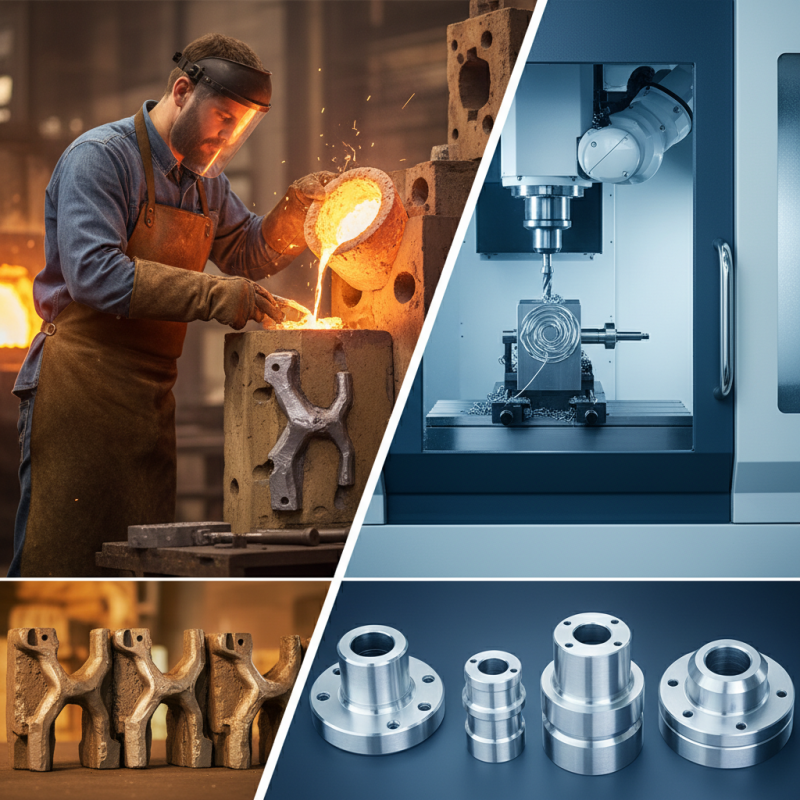
When exploring industrial manufacturing processes, many professionals ask, "what is the difference between casting and machining?" Both techniques are essential in fabricating parts and components across various industries, yet they serve distinct purposes. Casting involves pouring molten metal into a mold, allowing it to solidify into the desired shape. This method is often used for complex geometries that would be difficult to achieve through other means.

On the other hand, machining is a subtractive process. It removes material from a solid block using tools like lathes and mills. This technique offers high precision and surface finishes, especially important in applications where tolerance is critical. Understanding these differences not only informs material selection but also impacts design choices.

While both casting and machining have their unique advantages, each has associated challenges. For instance, casting may lead to defects like shrinkage or porosity, while machining requires careful control of tool wear. Professionals must weigh these factors when deciding which method to employ for their projects. By exploring these top differences, we can make informed decisions that enhance production efficiency and quality.
Top 10 Differences Between Casting and Machining Explained?

Key Principles of Casting in Manufacturing Processes

Casting is a fundamental manufacturing process that transforms raw materials into desired shapes. It involves pouring molten material into a mold, allowing it to cool and solidify. This method is particularly effective for creating complex geometries that would be challenging to achieve with traditional machining.

Key principles of casting include the importance of mold design and material selection. The mold must withstand heat and pressure without deforming. Various materials, such as sand or metal, can be used, each influencing the final product's surface quality and dimensional accuracy. Attention to detail is essential here; any imperfections can lead to structural weaknesses.

Temperature control is another critical aspect. The molten material's temperature must be carefully monitored to ensure proper fluidity and minimize defects like porosity. However, achieving the ideal balance between temperature and cooling time can be tricky. A poorly managed cooling process introduces residual stresses, causing parts to warp or crack. This challenges manufacturers to refine their casting techniques continually.

Top 10 Differences Between Casting and Machining Explained

Criteria Casting Machining
Process Definition Liquid material is poured into a mold to form desired shapes. Material is removed from a solid block using cutting tools.
Material Waste Minimal waste as material is molded into shape. Higher waste due to cutting and shaping excess material.
Setup Time Longer setup time due to mold creation. Shorter setup time but may vary based on complexity.
Production Volume Ideal for high-volume parts in bulk production. More suited for low to medium production volumes.
Surface Finish May require secondary finishing for smoothness. Can achieve high precision and superior surface finish.
Material Types Works with a variety of metals and alloys. Typically used with metals, plastics, and ceramics.
Design Flexibility Allows complex shapes and configurations. Limited by the cutting tool and setup.
Initial Cost Higher initial costs due to tooling and mold production. Lower initial costs but higher operational costs depending on volume.
Cycle Time Longer cycle time due to cooling and solidification. Generally faster cycle times for shaping parts.
Application Suitability Best for structural components like engine blocks. Ideal for precision parts such as gears and shafts.

Fundamental Concepts of Machining Techniques

Machining is a precision process used to shape materials. Understanding its fundamental concepts is crucial for effective application. Machining techniques involve removing material through cutting tools. Common methods include turning, milling, and drilling. Each technique has specific uses and advantages.

The goal of machining is to achieve desired dimensions and surface finishes. Factors like tool selection and speed affect the outcome. For instance, high speeds can result in superior finishes but may lead to quicker tool wear. It's essential to balance these variables for optimal performance.

Tips: Focus on your machine's settings. Regular maintenance can prevent unexpected failures. Always review your machining methods and learn from past projects. Mistakes can lead to valuable insights; reflecting on them is key. Exploring different techniques can enhance your skills, pushing boundaries and improving quality.

Comparative Analysis of Material Properties in Casting vs. Machining

Casting and machining are two fundamental manufacturing processes with distinct material properties. Casting involves pouring molten metal into a mold to create a shape. This method often leads to unique grain structures. Machining, on the other hand, removes material from a solid block. It provides high precision but can change the material's properties through machining stress.

Materials processed through casting typically exhibit higher tensile strength. According to research from the American Foundry Society, cast metals have superior fluidity and can form complex shapes without much waste. However, the cooling rate during casting can impact the microstructure, potentially leading to uneven hardness. Machined components offer great dimensional accuracy and surface finish. But they often have higher production costs and increased waste, sometimes up to 30% in material loss.

Choosing between these methods depends on project requirements. It's crucial to understand these differences. Appropriate material selection can optimize performance and reduce costs. While casting can be less precise, it offers impressive scalability for large numbers. Machining shines in situations where tight tolerances are essential. This insight can drive better decision-making in manufacturing processes.

Comparative Analysis of Material Properties in Casting vs. Machining

Production Efficiency: Differences in Casting and Machining Methods

When comparing casting and machining, production efficiency plays a vital role. Casting is often favored for its ability to produce complex shapes in a single step. According to the American Foundry Society, up to 40% of production costs can be reduced when using casting methods, especially in large batches. This method allows for the integration of features that would require multiple machining steps, saving time and labor costs.

On the other hand, machining offers high precision that casting sometimes cannot achieve. The International Journal of Advanced Manufacturing Technology states that machined parts can have tolerances as tight as 0.001 inches. However, such precision comes at a price, as machining typically results in higher material waste. Studies show that up to 30% of material can be lost during machining processes, which raises costs and impacts production timelines.

While casting can achieve efficiency in production, it may require more stringent quality checks. Defects in casting can be hidden until later stages, leading to potential rework. Machining, although precise, can also face delays due to tool wear and setup times. Balancing these factors is crucial for manufacturers seeking optimal efficiency and cost-effectiveness.

Cost Considerations in Choosing Between Casting and Machining Techniques

When choosing between casting and machining, cost is a critical factor. Casting often involves lower initial costs. It allows for mass production, leading to economies of scale. However, the setup costs can be significant; molds and patterns may require extensive investment. In contrast, machining usually has higher material costs, but this method wastes less material. Each technique has its financial implications.

Project requirements significantly influence cost-effectiveness. If precision is vital, machining might be better, offering tight tolerances and finer details. Yet, for larger parts, casting could be more practical. The transformation time is also a consideration; machining may extend the project timeline, raising labor costs. Quick production cycles in casting can be advantageous.

Ultimately, the choice hinges on specific needs. Factors like volume, material type, and part complexity matter. Balancing cost with quality is essential. Companies sometimes overlook long-term expenses for short-term savings. Understanding these aspects can lead to smarter decisions. Each project presents unique challenges, and the solution is not always straightforward.

FAQS

: What is casting in manufacturing?

: Casting is a process where molten material is poured into a mold. It solidifies into a specific shape.

Why is mold design important in casting?

Mold design determines the ability to withstand heat and pressure. Imperfections in molds can cause structural weaknesses.

How does temperature affect the casting process?

Proper control of molten material's temperature is crucial. It ensures fluidity and minimizes defects like porosity.

What are the differences between casting and machining?

Casting creates shapes by pouring molten metal, while machining removes material from a solid block. Each has unique properties.

Why might casting be more efficient than machining?

Casting can produce complex shapes in one step, saving time and reducing costs, especially for large batches.

What challenges do manufacturers face in casting?

Cooling rates can impact microstructure and hardness. Defects might not appear until later, leading to potential rework.

What should one consider when choosing between casting and machining?

Consider project requirements, desired precision, and cost implications. Material selection optimizes performance.

Are there environmental concerns in machining?

Yes, machining can lead to up to 30% material waste. This increases costs and affects production efficiency.

Can casting achieve high precision?

While casting can be efficient, it may lack the tight tolerances that machining offers.

How do manufacturers ensure quality in casting?

Stringent quality checks are essential. Defects in casting may not be visible until later stages, complicating the process.

Conclusion

The article "Top 10 Differences Between Casting and Machining Explained" delves into the fundamental aspects of two essential manufacturing processes. It clarifies key principles of casting, such as how molten material fills a mold to form shapes, and contrasts this with the fundamental concepts of machining, which involves cutting and reshaping materials to achieve desired specifications. A comparative analysis highlights the material properties of components produced through these methods, emphasizing the strengths and weaknesses inherent in each approach.

Furthermore, the article examines production efficiency, showcasing how the choice between casting and machining can significantly impact manufacturing timelines. Cost considerations also play a critical role in deciding what is the difference between casting and machining, as each method presents unique financial implications depending on the project requirements. By understanding these differences, manufacturers can make informed decisions tailored to their specific needs.

Ethan

Ethan

Ethan is a seasoned marketing professional with a deep expertise in our company's innovative product line. With a passion for sharing knowledge and insights, he takes the lead in regularly updating our corporate blog, where he explores industry trends, product features, and effective marketing......