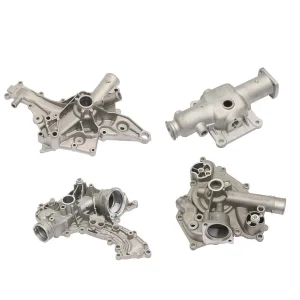
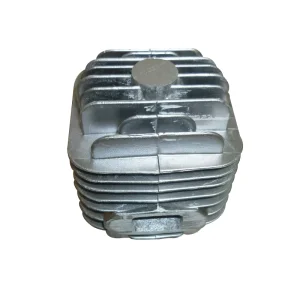
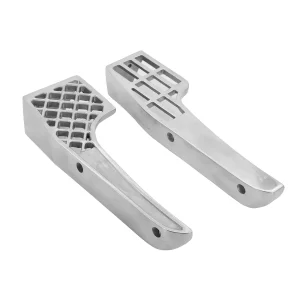
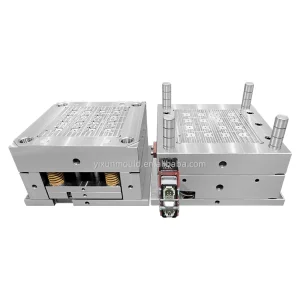
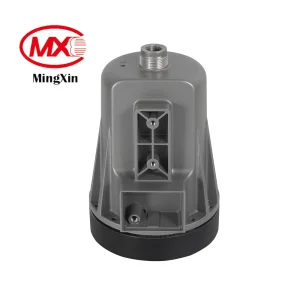
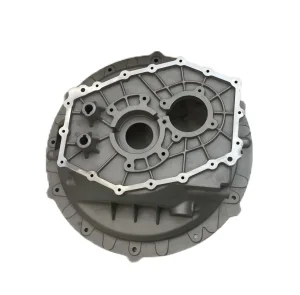
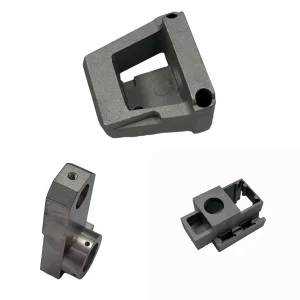
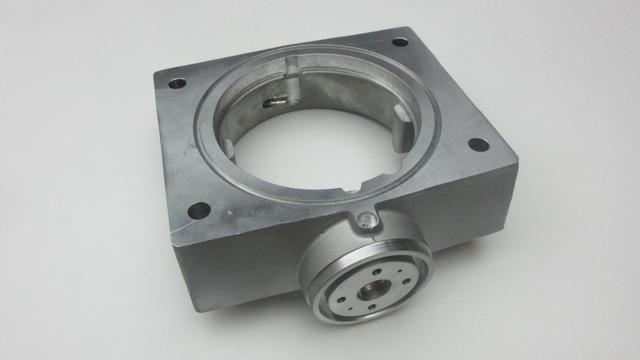
Ningbo Singer Cast Co., Ltd. is a professional die casting manufacturer specializing in aluminum, zinc, and precision metal components for a wide range of industrial applications. With years of experience in the metal manufacturing industry, the company has built a strong reputation for delivering high-quality, cost-effective solutions to global customers. Singer Cast provides a comprehensive range of services, including high-pressure die casting, mold design and development, CNC machining, surface finishing, and assembly. Its products are widely used in industries such as automotive, electronics, lighting, machinery, and consumer goods, meeting diverse requirements for durability, precision, and performance.
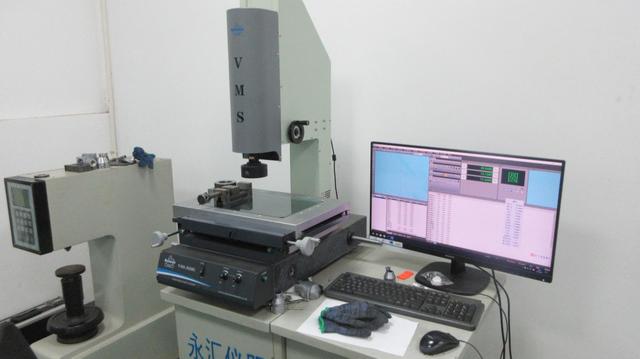
Equipped with advanced production facilities and supported by a skilled engineering team, Ningbo Singer Cast focuses on continuous innovation and process optimization. The company ensures strict quality control at every stage of production, from raw material selection to final inspection, complying with international standards and customer specifications. Dedicated to customer satisfaction, Singer Cast offers flexible OEM/ODM services and efficient project management to support customized manufacturing needs. With a strong global supply capability, the company is committed to delivering reliable, high-precision die casting components that help clients enhance product competitiveness and achieve long-term success.
In the quest for structural efficiency, modern engineering has looked beyond traditional steel and aluminum. Magnesium (Mg), with a density of approximately 1.74 g/cm³, represents the lightest structural metal currently available for commercial engineering. Sourcing wholesale magnesium parts from China has emerged as a cornerstone strategy for enterprises looking to scale production while containing costs. The metallurgical advantages of magnesium alloys—such as AZ91D, AM60B, and AM50—allow manufacturers to design thin-walled, highly complex parts with high dimensional stability and superior specific strength.
To understand the structural advantages of magnesium over its competitors, engineers must evaluate specific gravity, tensile strength, elasticity modulus, and thermal conductivity. Magnesium parts offer a unique combination of dampening capacity and electromagnetic shielding (EMI/RFI shielding), making them indispensable in automotive and telecommunications housing applications.
| Material Property | Magnesium (AZ91D) | Aluminum (A380) | Carbon Steel (1020) |
|---|---|---|---|
| Density (g/cm³) | 1.81 | 2.71 | 7.87 |
| Tensile Strength (MPa) | 230 | 310 | 420 |
| Thermal Conductivity (W/m·K) | 72 | 96 | 50 |
| Specific Strength (kN·m/kg) | 127 | 114 | 53 |
| Elastic Modulus (GPa) | 45 | 71 | 200 |
As detailed above, while aluminum retains a slightly higher absolute tensile strength, the specific strength of magnesium is significantly superior. This allows structural designers to achieve weight reductions of up to 33% compared to aluminum, and over 75% compared to steel. This weight reduction directly translates to increased range in electric vehicles (EVs) and reduced operational wear in rotating machinery.
Sourcing wholesale magnesium components from Chinese manufacturers offers structural advantages beyond simple labor cost arbitrage. China represents the epicenter of the global primary magnesium supply chain, controlling over 80% of the world's raw magnesium production. This geographical concentration of resources ensures that manufacturers like Ningbo Singer Cast Co., Ltd. enjoy uninterrupted access to high-grade ingots, protecting global buyers from volatile material supply disruptions.
The Yangtze River Delta, particularly Ningbo, hosts a dense network of raw material refiners, tooling designers, tooling foundries, heat-treatment providers, surface finishers, and logistics operators. This cluster effect results in several key advantages:
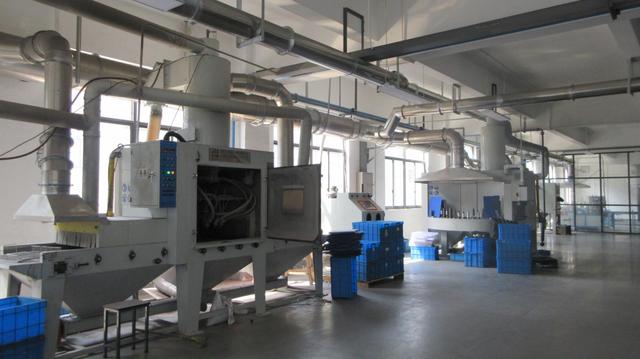
The manufacturing capability of Chinese suppliers is backed by substantial capital investment. Cold-chamber and hot-chamber die casting machines, ranging from 280 tons to upwards of 4,000 tons of clamping force, allow for the production of both tiny consumer electronics parts and massive structural automotive components (such as cross-car beams and oil pans).
For global procurement managers, the primary risk when sourcing overseas is not the capability of the supplier, but rather a lack of alignment regarding international engineering standards and regional environmental compliance. China's top-tier suppliers have successfully bridged this gap through rigorous quality management system integrations.
Quality assurance is maintained through global standards:
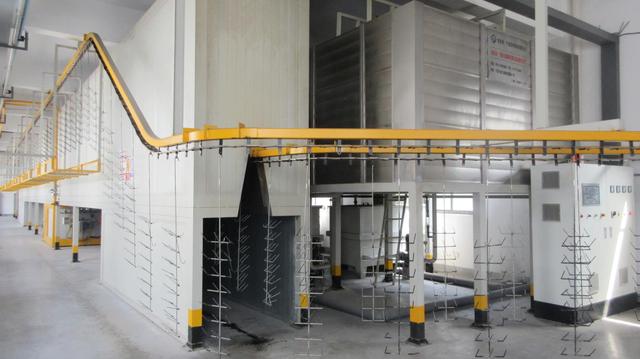
Magnesium parts require passivating surface coatings to prevent corrosion. In the past, hexavalent chromium was widely used. Today, Chinese suppliers comply strictly with European Union directives such as RoHS (Restriction of Hazardous Substances) and REACH (Registration, Evaluation, Authorisation and Restriction of Chemicals). Surface treatments utilize trivalent chromium, eco-friendly anodizing, or organic powder coatings to meet environmental guidelines.
Collaborative engineering is critical to success. Leading Chinese suppliers provide dedicated localization support, including native CAD file conversions (STEP, IGES, Parasolid), mechanical simulation feedback, and English-speaking project managers who bridge the time-zone gap. This ensures that the client's design intent is preserved from initial prototyping through to final serial production.
The magnesium parts manufacturing sector is undergoing rapid technological evolution, driven by the demands of electrification, high-performance computing, and sustainability goals.
Following the automotive sector's shift toward large-scale integrated aluminum structural components, magnesium giga-casting is gaining traction. By utilizing mega-scale die casting machines (5,000+ tons), manufacturers can cast complete rear underbodies, shock tower assemblies, and door inner frames as single, cohesive magnesium parts. This eliminates dozens of stamped steel components and subsequent welding/joining processes, reducing assembly line space and cycle times.
Standard AZ91D alloy can exhibit reduced creep resistance under sustained thermal and mechanical loads above 120°C. To address this limitation, metallurgists have introduced rare-earth (RE) elements, alkaline earths, and calcium to formulate high-performance alloys. Alloys such as AE44 and MRI153 offer superior thermal stability, allowing magnesium to be utilized in close proximity to engines, transmissions, and high-power electric drivetrains.
The integration of IoT sensors within the die casting mold cavity allows for real-time monitoring of temperature profiles, injection pressures, and solidification rates. Automated closed-loop controls adjust parameters shot-by-shot, minimizing internal porosity (such as shrinkage and gas entrapment) and ensuring that mechanical properties remain consistent throughout large production runs.
Understanding where magnesium parts provide the greatest return on investment (ROI) is key to making informed engineering decisions. The following fields leverage the unique properties of magnesium alloys:
As electric vehicles strive to extend range, every gram saved counts. Magnesium die castings are increasingly selected for instrument panel beams (IP beams), steering column brackets, seat frames, tailgate interiors, and electric drive housings. Magnesium's high dampening capacity also helps isolate road vibrations, improving ride comfort and cabin quietness.
For laptops, smartphones, tablet frames, and digital camera housings, weight reduction must be balanced with structural rigidity and heat dissipation. Thin-wall magnesium die casting (with walls as thin as 0.6mm to 0.8mm) provides a sturdy, metallic feel while ensuring internal heat is quickly transferred away from processors.
In aerospace applications, where launching a single kilogram costs thousands of dollars, magnesium-lithium or magnesium-aluminum alloys are utilized for non-safety-critical interior brackets, cabin framework, and auxiliary power unit enclosures. These alloys must undergo rigorous specialized surface treatments to resist atmospheric corrosion.



 Singer Cast