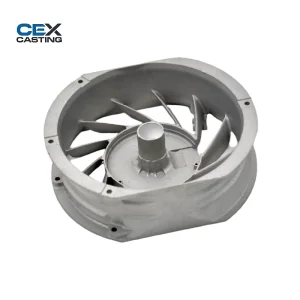
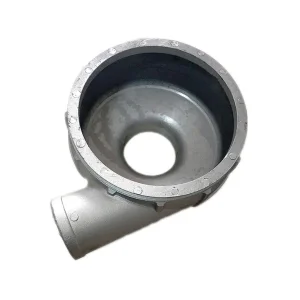
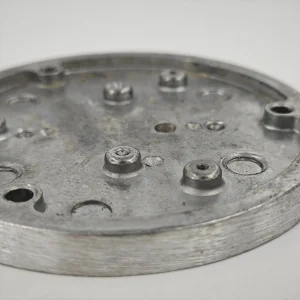
In the global landscape of industrial manufacturing, Low Pressure Casting (LPC) stands as a cornerstone technology for producing components that require exceptional mechanical integrity and minimal porosity. As China emerges as the hub of global casting supply, understanding the strategic benefits of sourcing from here is vital for procurement officers and engineering teams.
Chinese suppliers have pivoted from low-cost labor models to high-tech manufacturing ecosystems. Modern factories now integrate robotic pouring systems, automated mold temperature control, and real-time sensor monitoring. This shift ensures that the "Made in China" label now represents high-precision, repeatable quality that meets ISO/TS16949 standards.
The strength of the Chinese supply chain lies in its vertical integration. From raw alloy sourcing (often locally available near industrial clusters) to in-house CNC machining, surface treatment, and secondary assembly, Chinese exporters provide a "one-stop-shop" model. This reduces logistical bottlenecks and minimizes cross-border communication friction.
The casting industry is witnessing a technological renaissance. Driven by the EV revolution and lightweighting requirements in transportation, several key trends are shaping the supply market:
Whether you are a tier-one automotive supplier in Europe or a consumer electronics brand in the US, Chinese manufacturers provide scalable solutions. The focus is no longer just on "wholesale" pricing, but on "total cost of ownership" (TCO) reduction. By leveraging rapid prototyping, DFM (Design for Manufacturing) consultation, and reliable logistics, Chinese exporters act as extension partners to your own engineering departments.
Ningbo Singer Cast Co., Ltd. stands as a benchmark in this industry. Specializing in aluminum, zinc, and precision metal components, the company embodies the E-E-A-T principles: Experience through years of operational history, Expertise in die casting and mold design, Authority within the industrial machinery sector, and Trustworthiness through rigorous quality control processes. From mold design to CNC machining and assembly, they provide end-to-end manufacturing solutions that empower global brands to maintain competitive edges in their respective markets.
LPC allows for slower, controlled filling of the mold. This results in significantly lower porosity and better mechanical properties (strength and elongation) for critical components, especially those that require heat treatment.
Reputable suppliers employ CMM (Coordinate Measuring Machines), X-ray inspection for porosity, and spectral analysis for chemical composition. Most adhere to international ISO certifications to ensure global compliance.
Depending on mold complexity, prototype molds can take 3-5 weeks, while production molds typically range from 6-8 weeks. Post-casting machining and finishing add 1-2 weeks depending on volume.
 Singer Cast